

Bring representative routes
Use a normal day and a difficult day to explain the operation. Include stop locations, vehicle constraints, customer time windows and the work that happens at each stop. Identify which information is reliable and which currently needs manual judgment.
Connect planning to execution
Ask how the dispatcher reviews a plan, how the driver receives it and how changes are communicated. Confirm whether mobile, GPS and operational status functions are available in the current product and on the devices you use.
Define exceptions and integrations
Late orders, missed stops and unavailable drivers can change the plan. Review how those changes are represented and which system remains the source of truth. Confirm integration access, synchronization behavior and manual fallback before committing.
Measure with a defensible baseline
If you evaluate a pilot, document the baseline, comparable routes, time period and operational conditions. Fuel and delivery outcomes depend on those conditions. Trelveriq Fleet requires a current product demonstration; no improvement percentage is guaranteed.
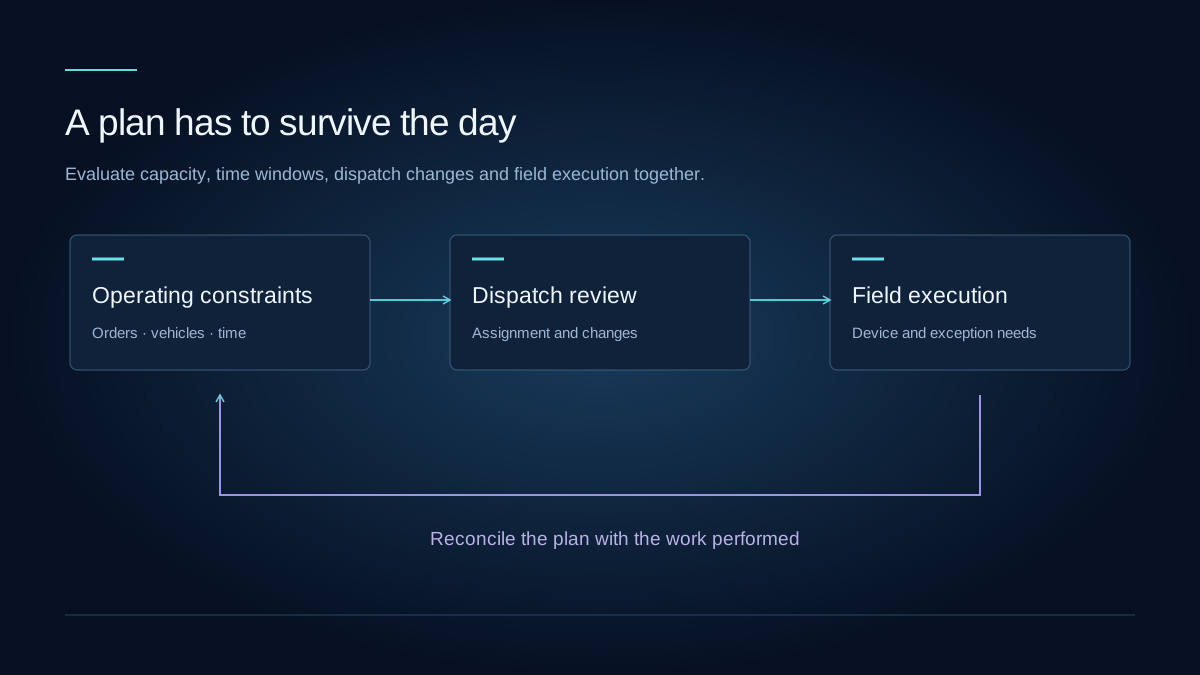
Evaluate the day that is difficult to deliver
- Which capacity, delivery-window and vehicle constraints are required?
- What should happen when an order, driver or stop changes during dispatch?
- How does the driver receive work and report an exception on the actual device?
Bring representative routes and operating constraints to the demonstration. Any performance comparison needs a consistent baseline and agreed measurement conditions after the workflow fit is established.
Trelveriq FleetFurther reading
Google OR-Tools routing documentationAn editorial perspective for project planning. Requirements and implementation choices depend on your organization and systems.