

Describe the present workflow
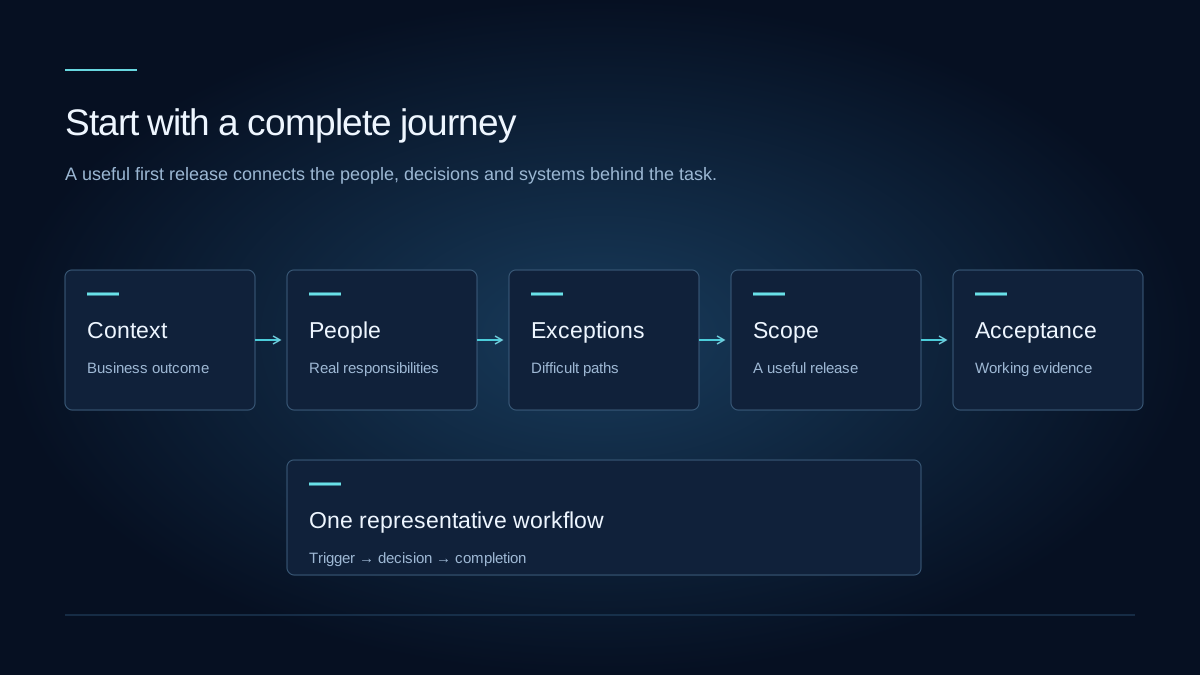
Walk through a real example from trigger to completion. Identify the people involved, the systems they use and the decisions they make. Bring sample forms and anonymized records where appropriate. A concrete example exposes hidden work more effectively than a long feature wish list.
Include the exceptions
What happens when information is incomplete, an approver is absent or a payment is reversed? Identify the situations that take the most effort today. Exceptions often determine the data model and permissions more than the ideal journey does.
Separate outcomes from features
Explain what should become easier, safer or more visible. “Add a dashboard” is a feature. “Help operations identify unassigned jobs before dispatch” is an outcome. Agree on the data and decisions a dashboard must support before designing charts.
Draw the system boundary
List existing applications, data owners and integrations. Clarify what should remain in place, what is being replaced and what must be migrated. Include access to APIs and vendor documentation as dependencies rather than assumptions.
Define the first complete journey
A useful first release lets a real user complete a coherent task. Set acceptance criteria, identify who can sign off and record the constraints around time, budget and operational change. Use discovery to make the choices visible before development begins.
Bring a workflow to the first discussion
- What triggers the task, and what does completion look like?
- Where do people copy information, make decisions or resolve exceptions?
- Which existing systems and operating responsibilities must remain in place?
Choose one representative journey and include a difficult example. This creates a practical basis for requirements, architecture and a first release that can be reviewed as working software.
Custom software engineeringFurther reading
GOV.UK Service Manual — discoveryAn editorial perspective for project planning. Requirements and implementation choices depend on your organization and systems.