

Describe the organizational structure
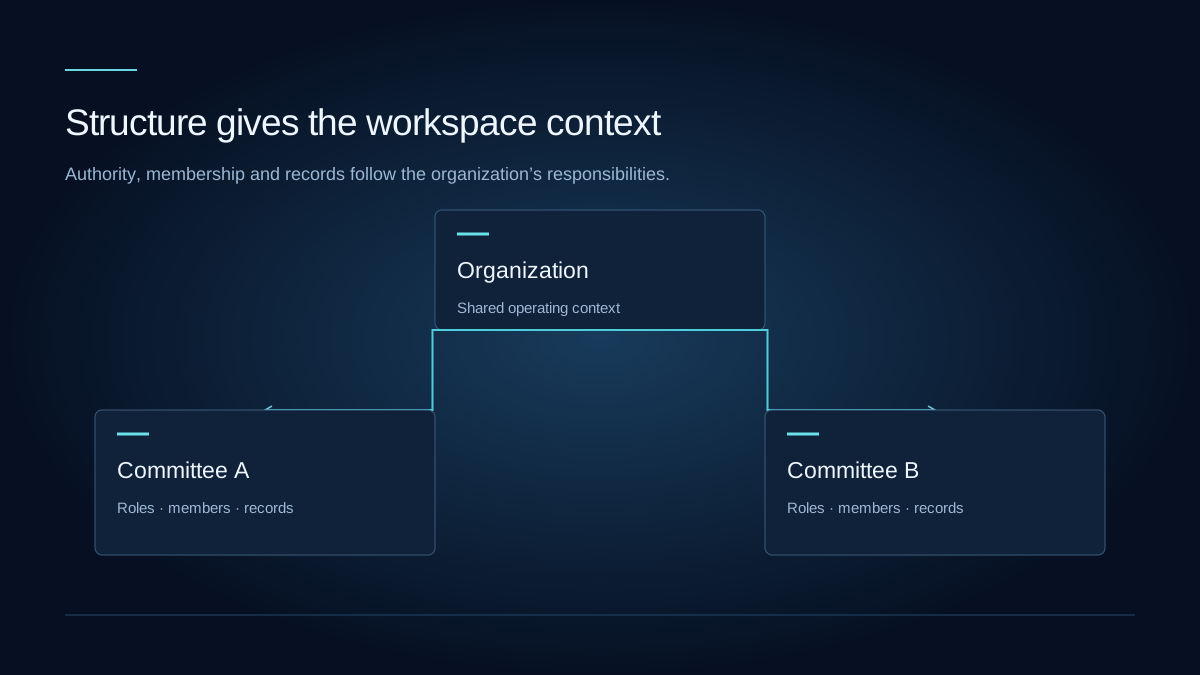
List the committees, their responsibilities and the relationship between members and administrators. Explain how appointments, membership changes and delegated responsibilities work today. The same person may hold different roles in different contexts; a single global permission label may not express that structure.
Walk through recurring administration
Choose real tasks and follow them from creation to review. Identify which information needs a shared workspace, what should remain restricted and who is responsible for changes. Distinguish required workflows from features that would merely be convenient.
Evaluate isolation and visibility
For a SaaS workspace, ask how organization boundaries apply to records, attachments, search and exports. Review permission changes and removal of access. A demonstration should show the boundary between organizations as well as the happy path within one organization.
Confirm scope and onboarding
Request a current module walkthrough. Establish product stage, migration options, training, commercial terms and support before deciding. Trelveriq Governance is a starting point for that conversation; availability and release readiness require a current review.
Prepare a committee workspace review
- How do committees, memberships and delegated responsibilities relate?
- Which records must be shared, restricted, approved or corrected?
- Which recurring administrative task will demonstrate a useful first workflow?
Bring the current committee structure and an anonymized example of the administrative work. Review available modules and access behavior before agreeing an onboarding or implementation plan.
Trelveriq GovernanceFurther reading
OWASP Authorization Cheat SheetAn editorial perspective for project planning. Requirements and implementation choices depend on your organization and systems.