

Follow the item through the operation
Start with the catalogue: item codes, units, purchase packs and sale sizes. Then follow receiving, preparation, movement, losses and returns. A correct balance depends on the meaning of each event, rather than a quantity field alone.
Keep supplier and purchasing context
Use a representative purchase to review supplier records, bills, partial settlements and returns. Clarify when goods are recognized, when a payable is recorded and how a correction is linked to the original event. Ask which steps require review.
Separate operational and statutory needs
Inventory valuation and stock-to-ledger visibility do not establish that a product can perform statutory accounting or filing. List the accounting, tax and reporting obligations separately, then confirm which system and professional owner are responsible for each.
Evaluate the current scope
Bring real examples, including measured quantities, expired stock and a supplier return. The current Trelveriq Commerce implementation connects counter selling, stock, purchasing, storefront orders, making and operational records. Review the configured workflows, live payment/carrier/tax-provider entitlements and deployment acceptance separately.
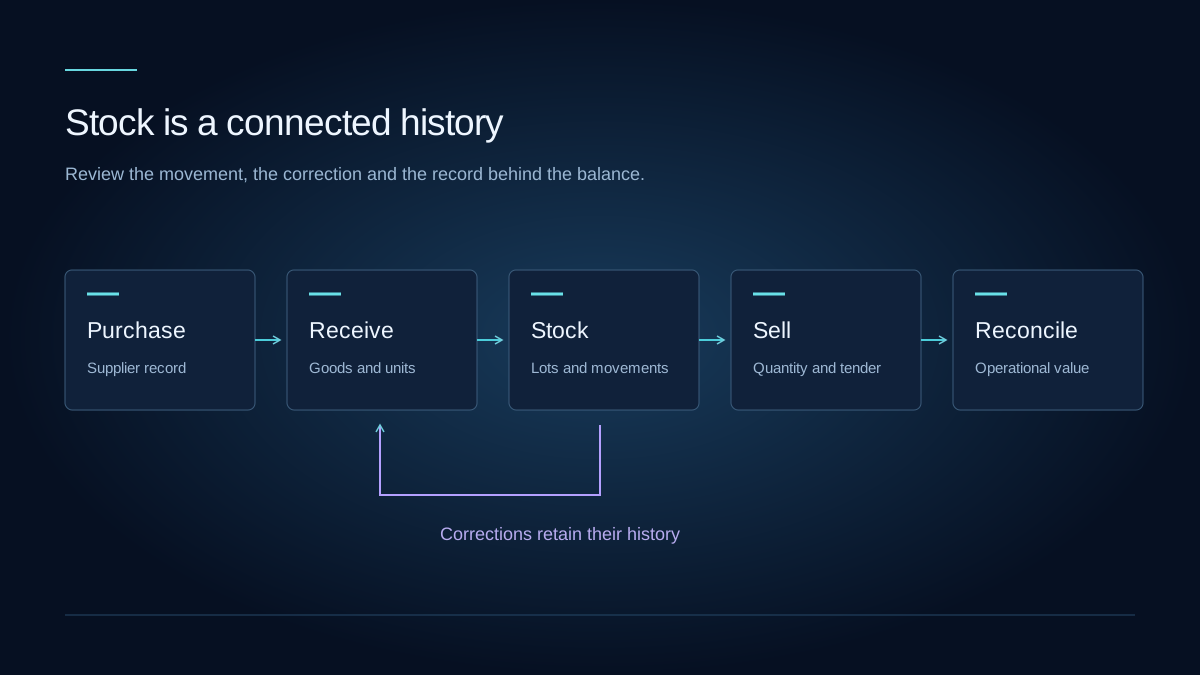
Follow a complete stock movement
- How do purchase units, stock units and sale sizes relate?
- Can a correction or supplier return be traced to the original record?
- Which system owns payments, selling and statutory accounting?
Use one item to walk through purchasing, receiving, a quantity correction and supplier settlement. Reconcile the physical and operational records before considering a broader migration.
Trelveriq CommerceFurther reading
GS1 standards overviewAn editorial perspective for project planning. Requirements and implementation choices depend on your organization and systems.